


Blockchain mobile app development is the process of building Android and iOS applications that use blockchain technology to make data more secure, transparent and decentralized. Instead of depending only on a centralized servers these apps connect to blockchain networks where information is verified and stored across multiple nodes. This setup helps reduce fraud, protect user data and build digital experiences that people can actually trust.
Today, businesses across different industries are turning to blockchain mobile app development to add features like smart contracts, digital wallets, token-based systems and decentralized applications (DApps). With modern APIs, SDKs and wallet integrations, blockchain can now be connected to Android and iOS apps quite smoothly, without really affecting performance or user experience.
Ready to explore how blockchain can transform your mobile apps? In this guide, we’ll walk you through the components, practical use cases, limitations and cost considerations so you can leverage blockchain technology to create secure, efficient and future-ready mobile applications.
How Blockchain Works in Mobile Applications?
Blockchain works in mobile apps by letting the app handle user actions and interface while blockchain processing happens on decentralized networks or backend services. When a user makes a transaction, the app sends it through APIs or wallets to the blockchain; where it’s verified by the network and recorded on a shared ledger. To keep apps fast and private, most data stays off-chain, while only important records or proofs are stored on-chain for security and trust.
Core Concepts Behind Blockchain Mobile Apps
- Decentralized ledger: Data is shared across multiple nodes instead of stored in one place which reduce single points of failure.
- Wallets and keys: Users keep private keys on their devices; usually protected by biometrics or secure storage.
- Transactions: Important actions are recorded on the blockchain to ensure the trust and traceability.
- Cryptography and hashing: Any attempt to change data breaks the chain and alerts the network.
- Consensus: Network participants agree before new data is added, ensuring integrity.
Common Mobile Blockchain Architectures
- Direct Web3 integration: The app connects directly to blockchain nodes using lightweight libraries. This offers more control but requires strong security practices.
- Backend-bridged model: The mobile app communicates with backend API that handle blockchain interactions; making onboarding easier and improving a performance.
- Hybrid off-chain model: Business logic runs off-chain, while important events or proofs are stored on-chain for verification.
What Are the Components of a Blockchain System in Mobile Application?
A blockchain-enabled mobile application is made up of several core components that works together to support decentralization, security and trust.
Key Elements
- Blocks: Blocks are digital containers that hold a group of verified transactions. Each block is connected to previous one using a cryptographic hash.
- Nodes: Nodes are computers or servers that run blockchain network and store copies of the ledger.
- Transactions: It represent actions taken by users such as sending tokens or interacting with smart contracts.
Consensus Mechanisms
- Proof of Work (PoW): Proof of Work is a consensus method where nodes solve complex mathematical problems to confirm transactions. Although it is very secure; it uses a lot of energy and is less practical for mobile-based applications.
- Proof of Stake (PoS): Proof of Stake validate transactions based on how much cryptocurrency a validator has staked in the network. It is faster and more energy-efficient than PoW making it a popular choice for modern blockchain mobile app development.
How a Block Is Created in a Blockchain Mobile App?
Whenever a user does something in a blockchain mobile app like sending a payment or signing data, a transaction is created and sent to network for verification. This process makes sure everything is secure and trustworthy without needing a central authority.
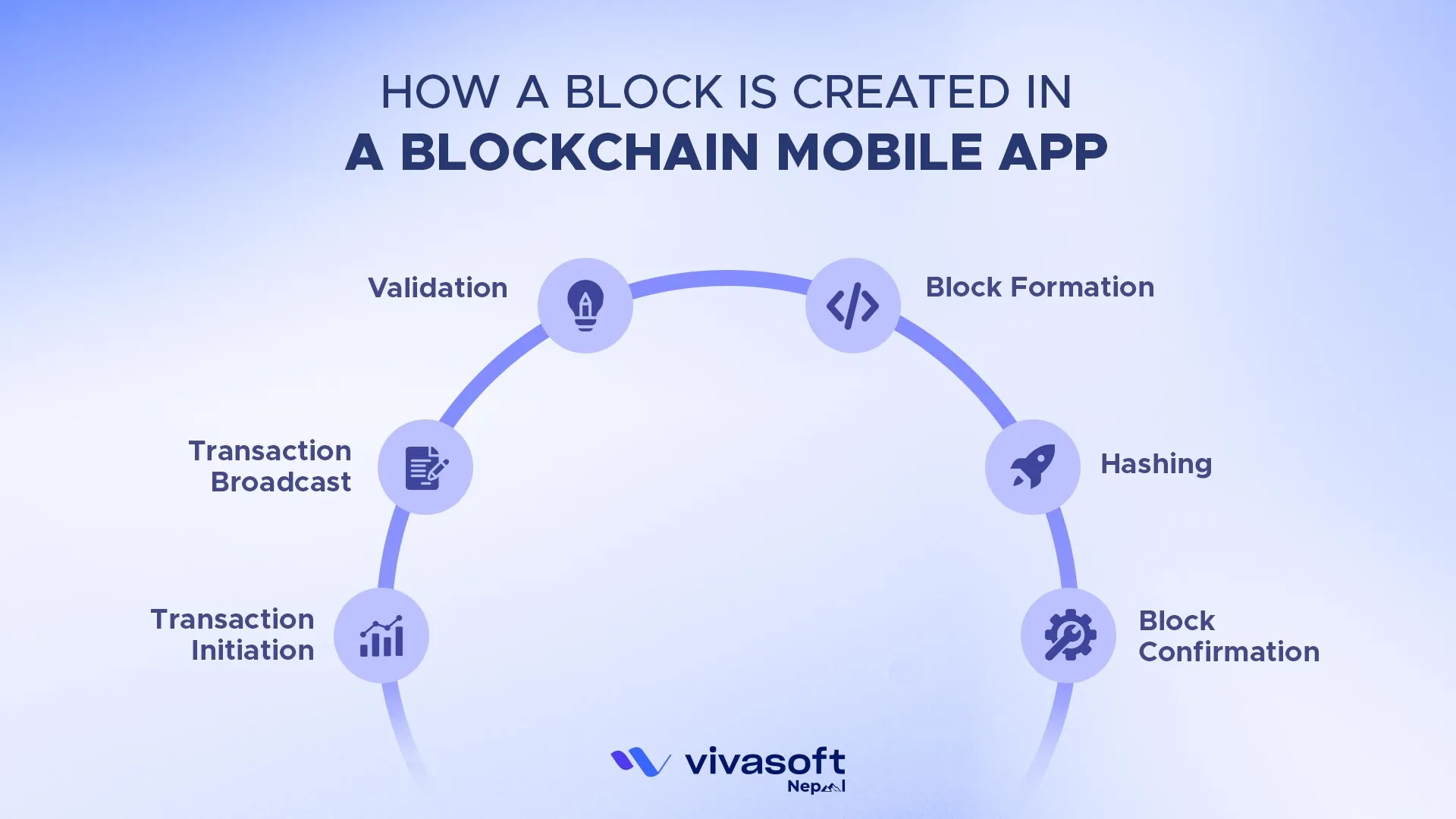
Here’s how a block is generally created :
- Transaction Initiation: The user triggers an action in the app.
- Transaction Broadcast: The transaction is sent out to the blockchain network so nodes can see it.
- Validation: Network nodes check that the transaction is genuine and follows the rules.
- Block Formation: Verified transactions are grouped together into a block.
- Hashing: The creating node performs the required work like Proof of Work hashing or Proof of Stake validation to securely link the new block to the previous one.
- Block Confirmation: The block is added to the blockchain becoming a permanent record.
Why Should Businesses Use Blockchain in Mobile App Development?
Blockchain mobile app development offers tangible business benefits beyond hype. For organizations dealing with sensitive data, multiple stakeholders or trust issue; blockchain can be a powerful differentiator.
Security and Data Integrity
Blockchain uses cryptographic hashing and encryption to keep data safe from being changed or accessed without permission. Once info is recorded on the blockchain; it’s really hard to change which helps lower risks of data breaches, fraud and unauthorized tampering.
Transparency and Auditability
Every transactions on a blockchain gets recorded on a shared ledger that anyone can verify anytime. This makes auditing simpler and more reliable; especially for industry like finance, supply chain and compliance-driven businesses where tracking and verification are important.
Cost Reduction and Efficiency
By removing intermediaries and automating processes through smart contracts; blockchain helps businesses cut operational cost. Task that usually require manual checks or third parties can be handled automatically, saving the both time and resources.
Enhanced User Trust
Users tend to trust systems where rules are enforced by code instead of centralized authorities. Blockchain transparent and tamper-resistant nature builds confidence, helping businesses establish long-term credibility with their user.
What Limitations Should You Consider When Developing a Blockchain Mobile App?
While blockchain offer clear benefits; it also introduces several challenges that businesses need to think through before development begins.
Performance & Scalability Issues
Blockchain networks are generally slower than traditional databases because every transactions need to be validate by the network. Network congestion, block confirmation times and scaling limitation can impact app performance, especially as user numbers grow. To address this many blockchain mobile apps rely on layer-2 solutions or hybrid architectures which add extra complexity to the system.
Storage & Technical Constraints
On-chain storage is limited and expensive; making it impractical to store large amount of data directly on blockchain. Most applications use off-chain storage for files and frequently changing data while keeping only critical references or hashes on-chain. This approach improves performance but requires careful planning to maintain data integrity and a security.
UX Considerations
Blockchain workflows are not always intuitive for everyday users. Tasks like creating wallets, managing private keys or approving transactions can feel confusing; especially for non-technical audience. Poor UX design can quickly lead to drop-offs so simplifying user journeys and hiding technical complexity is essential.
Regulatory & Compliance Challenges
Legal and regulatory rules are different across regions and industries. Data privacy laws, financial regulations and compliance standards can affect how blockchain mobile apps store data and deal with transaction. Businesses need to make sure their app design follow the current rules to avoid legal risk.
Cost & Transaction Fees
Blockchain development often involves additional cost such as gas fees, infrastructure setup, smart contract audits and ongoing maintenance. Transaction fees can fluctuate depending on network demand which makes cost planning more challenging compared to traditional apps.
User Adoption Challenges
User adoption remain one of the biggest hurdles for the blockchain mobile apps. Many users are still unfamiliar with blockchain concept which creates a learning curve. Clear onboarding, education and even a simple interfaces play a crucial role in encouraging adoption and long-term engagement.
Business Applications of Blockchain in Mobile Apps
Blockchain is no longer just about cryptocurrency or digital coins. Today, businesses across different industries are integrating blockchain into mobile apps to solve real operational problem.
Use Cases Beyond Cryptocurrency
- Supply chain management: Blockchain mobile apps help to track products in real time, verify their origin and reduce fraud by keeping record transparent and tamper-proof.
- Finance and payments: Enable fast and secure peer-to-peer transactions without heavily relying on intermediaries making mobile payment apps more efficient and cost-effective.
- Healthcare: Allows patient records to be store and shared securely ensuring data cannot be altered; while still giving access to authorized parties.
- Gaming: Introduces NFTs and real digital ownership, letting players control, trade or even sell in-game assets outside the game ecosystem.
- Identity verification: Decentralized digital IDs give user control over their personal data and help reduce identity theft and data misuse.
Popular Blockchain Mobile App Examples
- MetaMask: A popular crypto wallet that lets users manage tokens and connect with dapps on mobile. It keeps blockchain stuff in the background so users don’t get confused while still letting them do transactions securely.
- Trust Wallet: A mobile wallet for sending, receiving and storing crypto. It’s simple and easy to use, so even beginners can handle blockchain without much trouble.
- Axie Infinity: A blockchain game where players can own, trade and battle digital assets like NFTs. Shows how blockchain can make gaming and digital ownership work on mobile without making it too complicate.
- DeFi Platforms (like Aave, Compound): Mobile apps that let users lend, borrow or stake crypto without banks. They show why good design is important to make complicated finance stuff easy to use.
How to Develop a Blockchain Mobile App?
Developing a blockchain mobile app requires a clear strategy that balances business needs, user experience and a right blockchain technology. Here’s a step by step to develop a blockchain mobile app.
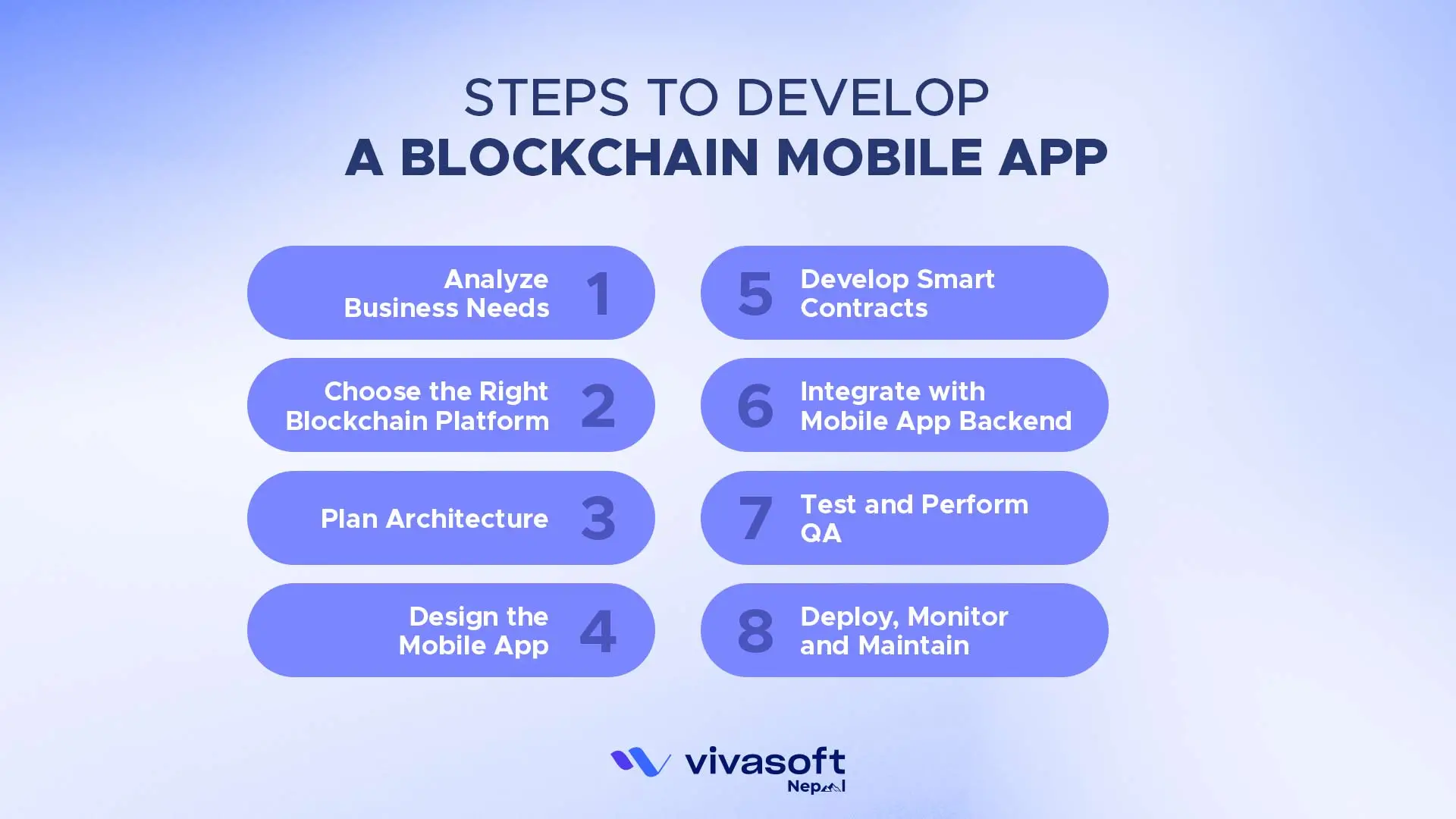
Step 1: Analyze Business Needs
Before jumping into development, it is very important to understand why you need blockchain in the first place. Blockchain works best when trust, transparency or decentralization is a real problem to solve. Identify the gaps in your current system and confirm whether blockchain actually add value because not every mobile app requires decentralized architecture.
Step 2: Choose the Right Blockchain Platform
Different blockchain platforms are built for a different use cases. Ethereum is popular for smart contracts, Solana is known for speed, Polygon offers low-cost transaction while Hyperledger and Corda are often used for enterprise solutions. You’ll also need to decide between a public blockchain which is open and transparent or a private blockchain which gives more control and privacy.
Step 3: Plan Architecture
In this stage, define how your mobile app will interact with a blockchain. Decide what kind of data should be stored on-chain for security and what can stay off-chain for a better performance. Backend integration, APIs and middleware play key role in ensuring smooth communications between the mobile app and a blockchain network.
Step 4: Design the Mobile App
Blockchain apps should feel simple even if the technology behind them is complex. Focus on UX/UI that makes wallet creation, transaction signing and onboarding easy for user. Wireframes and prototypes help visualize the flow early and reduce confusion later in development.
Step 5: Develop Smart Contracts
Smart contracts handle the core logic of the blockchain app. They are usually written in languages like Solidity or Vyper and must be developed with strong security practices. Thorough testing and careful deployment are critical; as smart contracts cannot be easily changed once they go live.
Step 6: Integrate with Mobile App Backend
Once smart contracts are ready, they need to be connected to the mobile app through APIs and SDKs. This step also includes setting up databases and backend services that support off-chain operation while keeping everything secure and reliable.
Step 7: Test and Perform QA
Testing isn’t just about checking if features work. Functional testing makes sure everything works like it should while security audits find vulnerabilities in smart contracts. Performance optimization is also needed to keeps the app fast and responsive.
Step 8: Deploy, Monitor, and Maintain
After deployment, the app needs constant monitoring. CI/CD pipelines help push updates smoothly and regular maintenance keeps it secure and scalable. As usage grows, the system should be improved to handle more traffic and changing business needs.
Tech Stack for Blockchain Mobile App Development
The tech stack you pick really impacts how stable, secure and scalable your blockchain mobile app will be. Since these apps combine mobile development with decentralized systems; the stack usually include blockchain tools, mobile frameworks and cloud infrastructures working together.
Blockchain-Specific Tools & Frameworks
Platforms like Ethereum, Solana and Polygon offer SDKs, APIs and smart contract libraries that help mobile apps connect with blockchain network. Web3 libraries are commonly used to interact with wallets and smart contracts making blockchain features easier to integrate without handling everything from scratch.
Mobile App Front-End & Back End
React Native and Flutter are popular for building cross-platform apps for Android and iOS while Kotlin and Swift are use for native development when needed. On the backend side, Node.js is often used to manage APIs and a blockchain interactions with databases handling off-chain data.
Infrastructure & Deployment
Cloud service are used to host backend systems and support scalability as the app grows. CI/CD pipelines help automate testing and deployment while containerization makes updates smoother and more reliable over time.
Cost Factors in Blockchain Mobile App Development
Building a blockchain mobile app isn’t cheap and the cost can be change a lot depending on different things. Knowing what affects the price early on can help avoid surprises and plan a better budget.
Factors Influencing Cost
- Blockchain Platform: Choosing Ethereum, Solana or Hyperledger affects setup difficulty and can lead to extra fee.
- Smart Contract Complexity: More advanced contracts need extra coding, testing and security checks.
- Security Measures: Audits, encryption and other protections add to cost but are important.
- Ongoing Maintenance: Keeping the app, backend and blockchain running smoothly requires continuous updates.
- Unexpected Challenges: Delays, bugs or network issues can increase costs if not planned for.
Cost Breakdown Table
Here’s a quick cost breakdown for developing a blockchain mobile app.
Future Trends in Blockchain-Integrated Mobile Apps
Blockchain-integrated mobile apps are evolving rapidly and as the technology grow users expect more. Here are some of the future trends shaping how these apps will be built and used.
- Rise of decentralized finance (DeFi) apps on mobile: DeFi is moving rapidly to mobile, allowing users to trade, lend, borrow and manage digital assets directly from their smartphones. Better UI designs and faster blockchain networks are making DeFi apps simpler and a more practical for everyday users.
- AI + blockchain integration: The combination of AI and blockchain is gaining momentum in mobile apps. AI helps with data analysis, fraud detection and automation while blockchain ensures transparency and secure data handling. Together, they enable smarter and more reliable mobile solutions.
- Decentralized identity and wallets: Blockchain wallets are evolving beyond crypto storage. They now support decentralized identity, digital credentials and secure authentication, giving users more control over their own personal data across mobile platform.
- Next-generation Dapps for Android and iOS: Future Dapps are focusing on performance, scalability and user experience. With lower transaction fees, smoother onboarding and improved cross-platform support, blockchain-powered mobile apps are becoming closer to the feel of traditional apps.
Conclusion
Blockchain mobile app development is no longer just a trend; it is the strategic investment for businesses seeking security, transparency and a innovation. By understanding how the blockchain work, choosing the right platform and focusing on user-friendly design, businesses can actually build scalable and trustworthy mobile applications.
It doesn’t matter if a company is a startup trying something new or a big enterprise upgrading old systems. This is honestly a good time to look into blockchain mobile app development and plan things properly with the right experts helping along the way.
Blockchain Mobile App Development: FAQs
What are the best frameworks for blockchain mobile app development?
The best frameworks for blockchain mobile app development include Ethereum for smart contracts, Solana for high-speed applications and Hyperledger for enterprise solutions.
How do you integrate wallets into a mobile Dapp?
Wallet integration is usually done through SDKs, deep linking or tool like WalletConnect. These allow users to securely connect their wallets, approve transactions and sign messages without exposing private keys inside the app.
What are the best cross-platform tools for blockchain apps on iOS and Android?
The best cross-platform tools for blockchain apps on iOS and Android include React Native and Flutter, which let developers use a single codebase for both platforms. This reduces development time while supporting features like wallet integration and smart contract interactions.
What are the common security pitfalls in blockchain mobile apps?
Security issues in blockchain mobile apps often come from poorly written smart contracts, weak private key management, or lack of proper audits. Even small mistakes in blockchain logic can lead to the serious vulnerabilities.
How do you design mobile UX for blockchain onboarding flows?
Good blockchain UX focuses on simplicity. This means making wallet setup easy, explaining complex steps in plain language, and reducing unnecessary actions so users can get started without feeling overwhelmed.